Connected Clinical System
 +
+
A connected web and mobile clinical portfolio system shaped around interoperability, role-aware access, and traceable product behavior.
Built to demonstrate how structured clinical data, audit-aware behavior, and cross-surface workflows can work across web and mobile surfaces.
Overview
A connected portfolio system for read-only clinical workflows across web and mobile.
The Connected Clinical System is a connected web and mobile portfolio system composed of ClinicDashboard and ClinicView Lite. It was built to show how role-aware access, structured clinical data, auditability, and cross-surface workflows can work together in a healthcare product designed beyond a single isolated app.
ClinicDashboard provides the web surface for operational visibility, role-aware access, and read-only clinical review shaped by each role. ClinicView Lite provides the mobile surface for read-only patient review, timelines, notes, and structured clinical data access. Together, they demonstrate how healthcare software can be shaped with clearer boundaries, more traceable behavior, and more consistent product decisions across web and mobile.
Why it was built
The system was built to explore healthcare product behavior beyond a single screen or surface.
Most clinical software examples stop at isolated screens or single-surface experiences. The Connected Clinical System was built to explore a more complete product story: how read-only clinical workflows, role-aware access, auditability, and structured data access can work together across connected web and mobile surfaces.
Rather than treating web and mobile as separate demos, the system was designed to show how product behavior changes with role, context, and surface. It creates space to demonstrate clearer boundaries between clinical review, operational visibility, and audit-aware system activity in a healthcare setting.
Built to show healthcare product behavior, not just healthcare UI.
System model
The system is organized as a connected product model rather than a single isolated application. Each surface plays a different role, while sharing the same broader system model for role-aware access, structured clinical data, auditability, and cross-surface product behavior.
 Built with Next.js
ClinicDashboard is the web surface of the system and the server-side foundation behind its connected behavior. It supports four roles — Physician, Nurse, Admin, and Compliance — with different visibility across the product. Clinical roles stay focused on read-only review surfaces such as Overview and Patients, while Admin and Compliance roles can also inspect Audit Explorer and Users & Access.
As the server-backed surface of the system, ClinicDashboard also provides authenticated access, protected API and FHIR endpoints, audit-aware system behavior, and session visibility within the connected product model.
 Built with React Native
ClinicView Lite is the mobile surface of the system. It focuses on read-only patient review, timelines, notes, and structured clinical data access through a handheld review experience. It can run either as a standalone demo or in connected mode against the dashboard services. In connected mode, it becomes part of the same broader system story for authenticated access, audit-aware behavior, and connected clinical data review.
Connected foundations across both surfaces
Both surfaces are shaped by the same broader system model: structured clinical data, role-aware access, audit-aware behavior, visible session activity, and protected API and FHIR access. While each surface serves a different role, both belong to the same connected product story for read-only clinical workflows, traceability, and cross-surface behavior.
Design principles
The system is intentionally focused in scope, allowing its design to be guided by the same principles that shape serious healthcare software.
Built around role-aware access
Clinical information becomes easier to navigate and easier to trust when visibility stays deliberate. Access patterns should remain predictable, product surfaces should stay focused, and each role should see what supports its work without unnecessary breadth or avoidable privacy exposure.
Built for traceability
Auditability is treated as part of the product, not as a hidden implementation detail. User activity, access behavior, and session activity are meant to remain visible and inspectable across the system.
Built for interoperability
FHIR-backed and API-driven access create a more reliable foundation for connected workflows, shared data, and integration-aware healthcare software across web and mobile surfaces.
Built with disciplined scope
The system stays intentionally focused: read-only clinical review, role-aware visibility, audit-aware behavior, and connected data access instead of trying to simulate a full EMR or operational platform.
What it demonstrates
Connected Clinical System is a focused portfolio system that demonstrates several key capabilities for healthcare software and regulated product environments.
Role-aware product behavior
Different roles see different parts of the system, reflecting real differences in responsibility, visibility, privacy boundaries, and operational scope across the product.
Connected cross-surface product behavior
ClinicDashboard and ClinicView Lite show how the same product can support connected clinical review, access-aware behavior, and structured data access across web and mobile surfaces without losing consistency in scope or product principles.
Audit-aware and session-aware behavior
User activity, access events, and session behavior are treated as visible product behavior, with audit information exposed through dedicated system views.
Read-only clinical review workflows
The system keeps clinical review focused on inspectable, predictable access to patient information, timelines, and notes across web and mobile surfaces.
Interoperability-ready foundations
FHIR-backed and API-protected data surfaces help position the system within a more realistic healthcare software context, where integration and structured data exchange matter.
Compliance-aware product direction
The system reflects a product approach shaped by traceability, access boundaries, and audit-aware behavior, with design decisions suited to sensitive healthcare environments.
For Decod8, this case demonstrates more than interface design. It shows how product boundaries, role-aware access, auditability, and connected system behavior can work together to support more credible healthcare software.
Selected product surfaces
Selected product surfaces from Connected Clinical System, showing how role-aware review, audit visibility, session behavior, and mobile clinical access are expressed across web and mobile.
Role-aware web review
Distinct review surfaces for Admin, Compliance, Physician, and Nurse roles, with visibility shaped by responsibility and operational context.
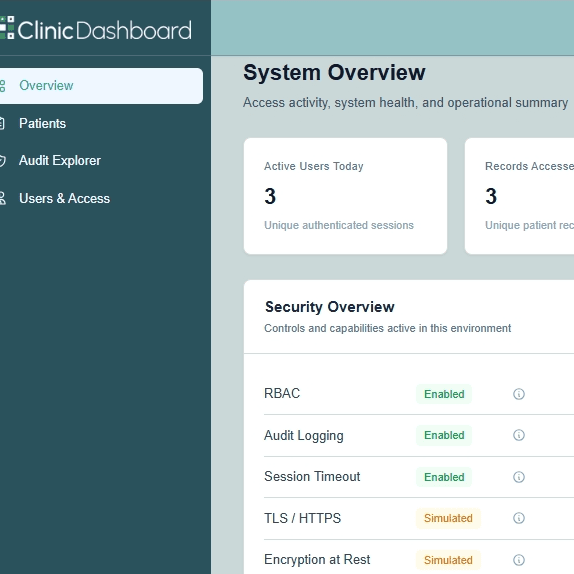
Admin
System oversight and access visibility.
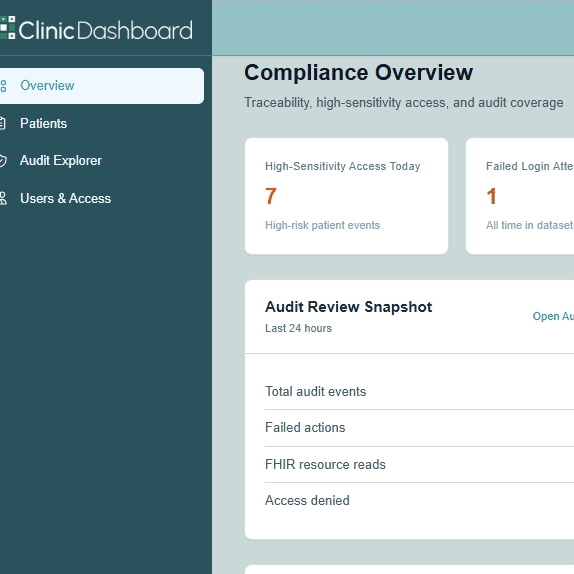
Compliance
Audit-focused review surfaces.
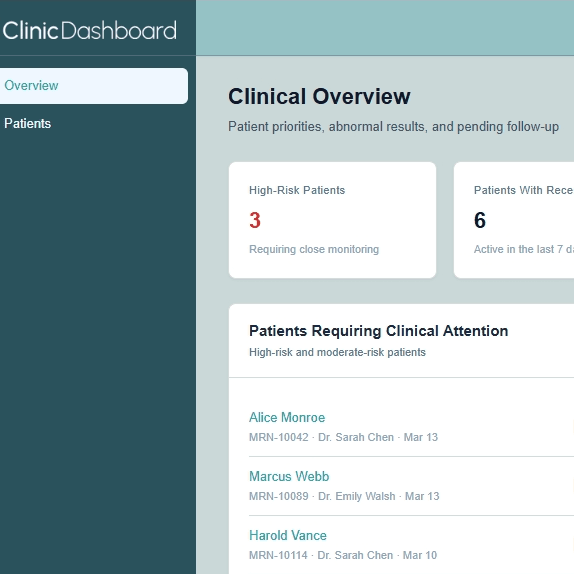
Physician
Broader clinical review.
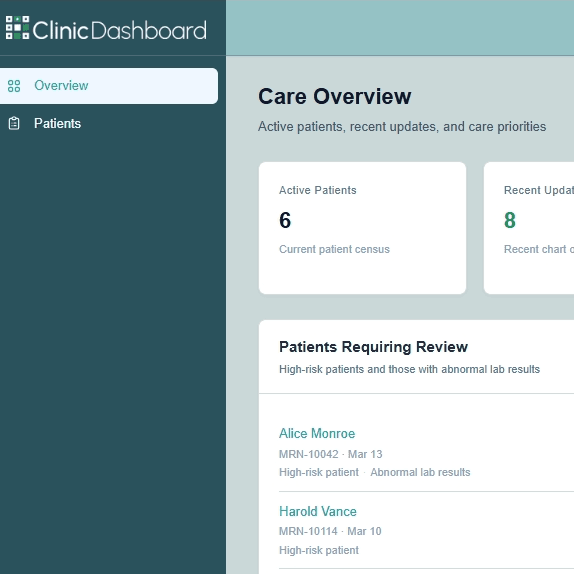
Nurse
Focused care review.
Audit and session visibility
Audit events and session activity are surfaced directly in the web UI, making access patterns and system behavior easier to inspect.
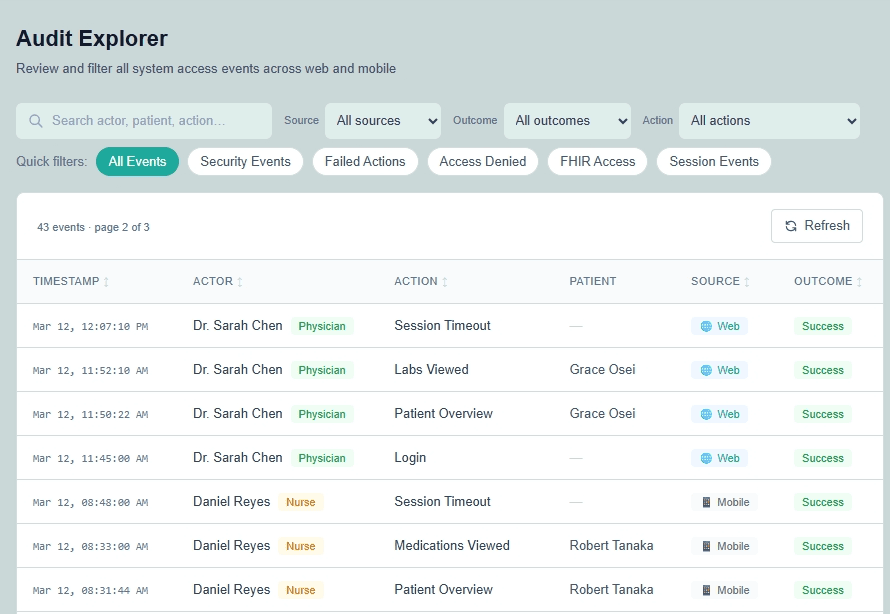
Activity audit trail
Dedicated audit visibility across web and mobile activity.
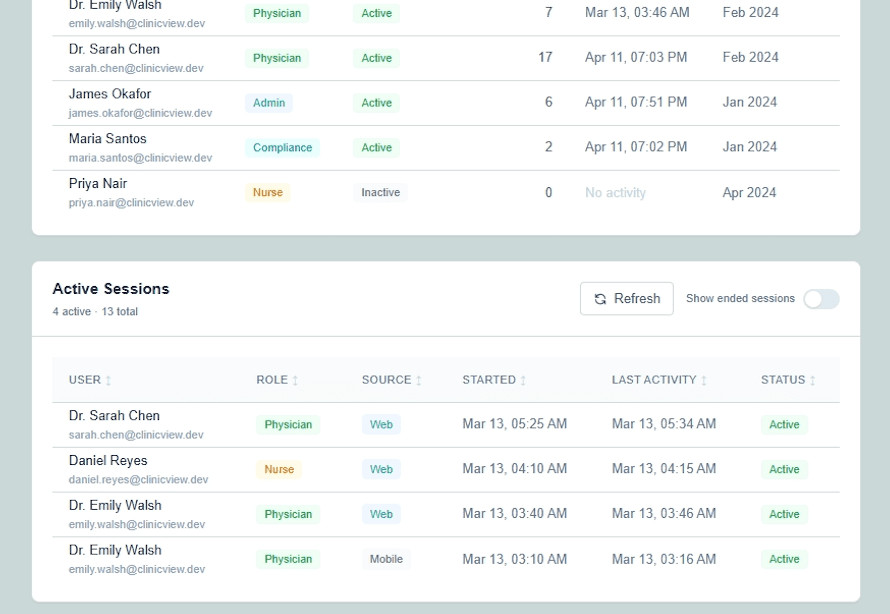
Users, access, and active sessions
User roles, access activity, and active sessions surfaced directly in the web product.
Mobile clinical review
A mobile surface for read-only patient review, timelines, notes, and structured clinical data access.
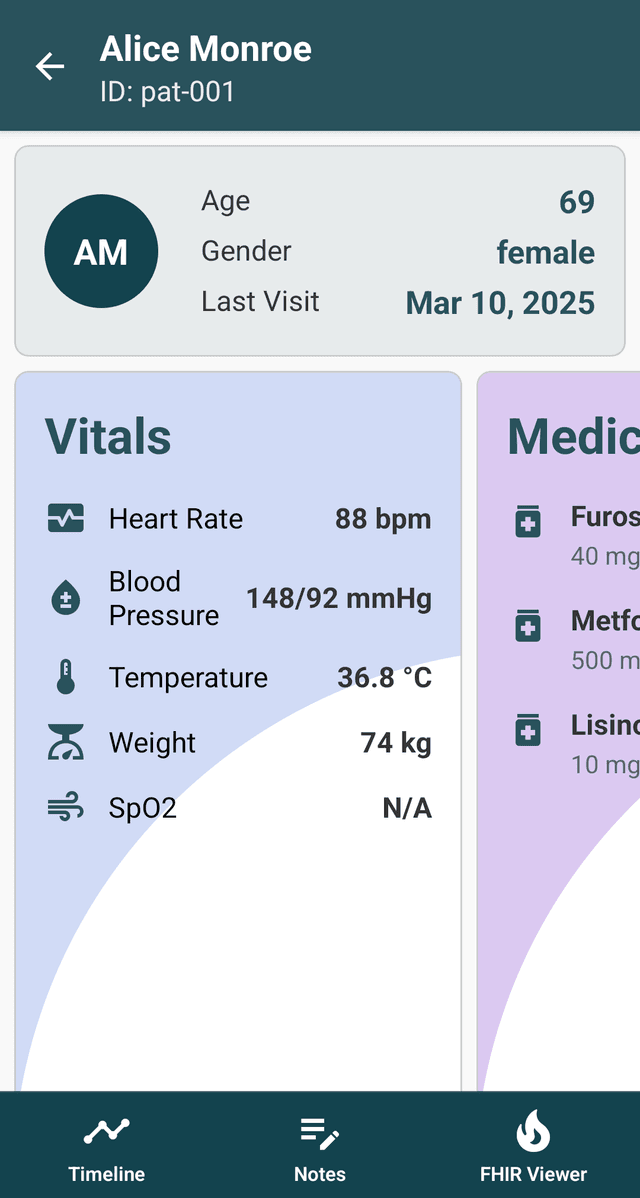
Patient summary
Read-only clinical overview at the point of care.
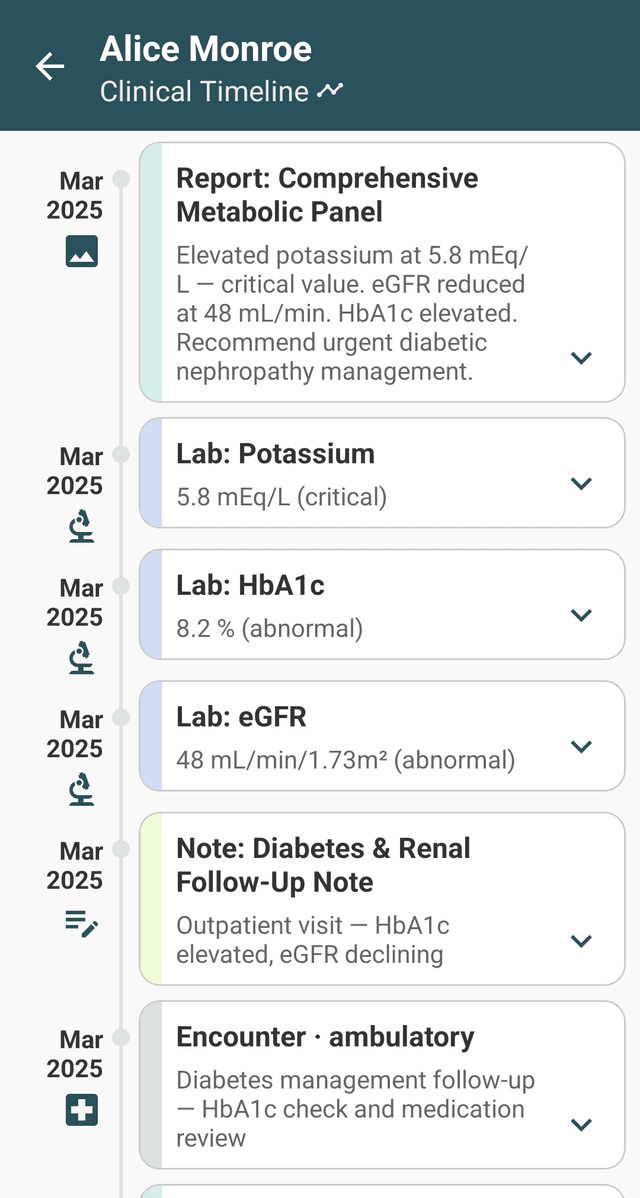
Clinical timeline
Chronological clinical history optimized for mobile review.
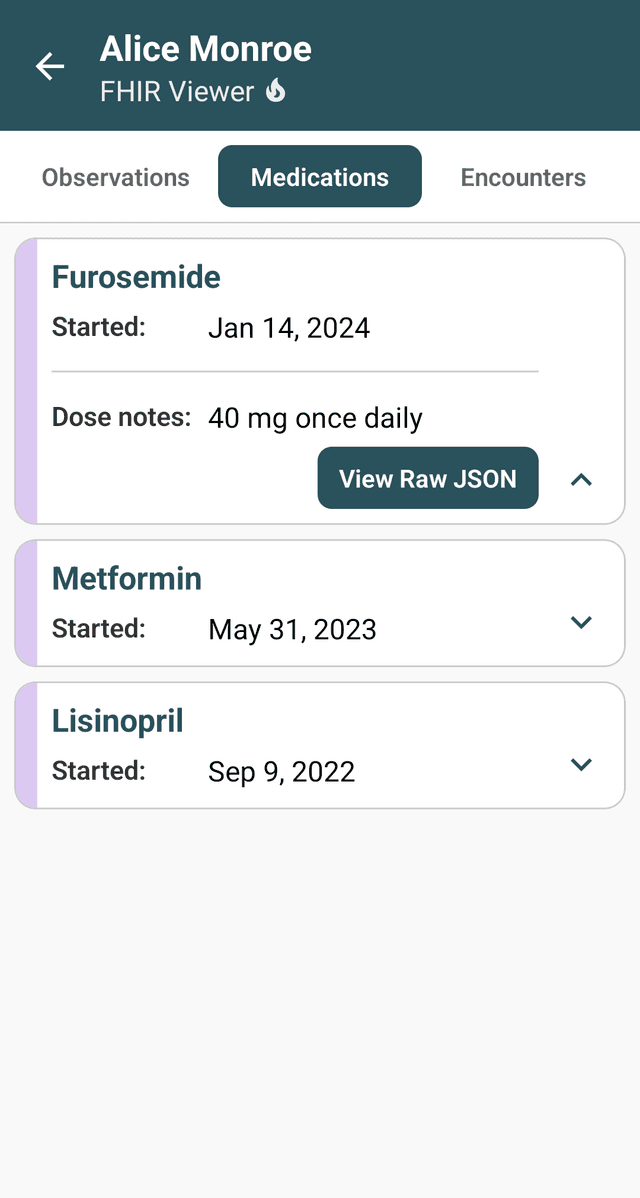
Structured data review
FHIR-backed access to connected clinical data.
Outcome
Connected Clinical System became an important portfolio system for Decod8 because it demonstrates how role-aware access, audit visibility, traceable behavior, and connected data access can work together across web and mobile surfaces.
The system is built around read-only clinical review, structured clinical data, and clear product boundaries across distinct surfaces. It shows how Decod8 approaches healthcare software with deliberate scope, more predictable behavior, and decisions shaped for sensitive environments.
For Decod8, this case demonstrates more than interface design. It shows how product structure, technical boundaries, and system behavior can work together to support better healthcare software.
Better healthcare software depends on clear boundaries, predictable behavior, and connected product thinking.
If you're building healthcare systems where interoperability, access control, and product clarity matter, Decod8 could be a strong fit. Let's talk.
Get in touchSource available for technical review.